Bonus Engine
TLDR
Operators had no way to set up or manage bonus campaigns, creating a major gap in our product offering. I turned complex logic into a simple, white-label dashboard. This allowed operators to launch campaigns independently and provided a new, essential feature for the business.
Industry
iGaming
Role
Product Designer
Timeline
4 Week Sprint
Overview
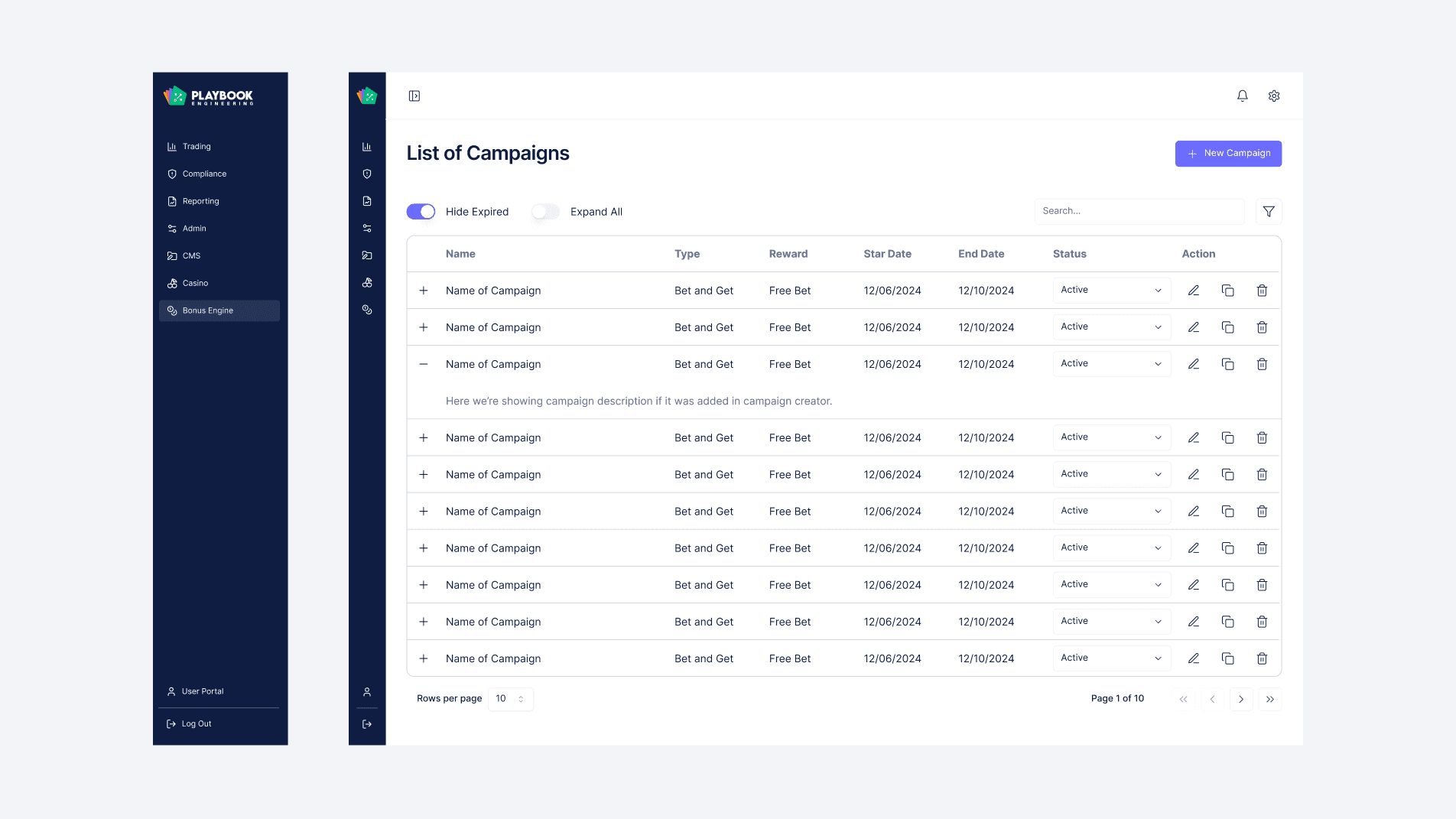
This project was a rescue mission for our back-office dashboard. Originally built by developers, it lacked scalability and a user-friendly interface. As the lead designer, my role was to oversee an external agency’s core logic while personally designing the white-label frontend to ensure the MVP was both technically viable and "dev-ready".
Research
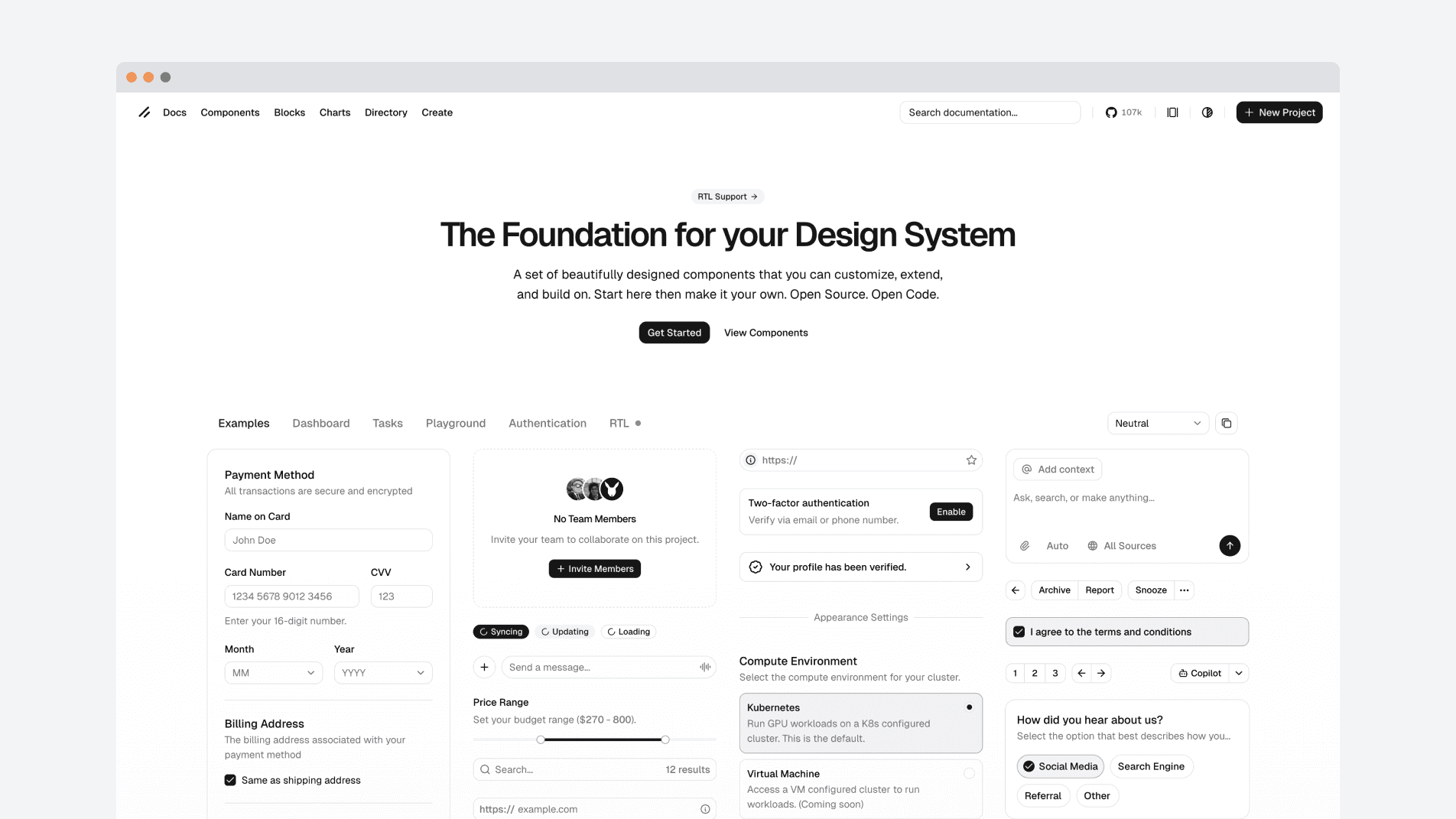
The primary challenge was a four-week timeline. We needed to translate complex agency logic into a polished UI without the luxury of building a custom library from scratch. I audited established systems like Material Design but found them too "off-the-shelf" for our specific needs.
Pain Point 1
The dashboard was developer-built with no design system in place. This made implementing new features like the Bonus Engine difficult.
Pain Point 2
A very tight window to deliver dev-ready screens. Building a custom library from scratch wasn't an option if we wanted to hit the launch date.
Pain Point 3
We had to bridge the gap between third-party logic and our own standards, ensuring the new engine felt like a native part of the platform.
I eventually led the decision to adopt ShadCN. By leveraging this community-driven framework, we gained a robust, accessible foundation that allowed us to move quickly without incurring technical debt. This balance ensured we could focus on the complex functional requirements of the bonus engine rather than basic component styling.
Architecture
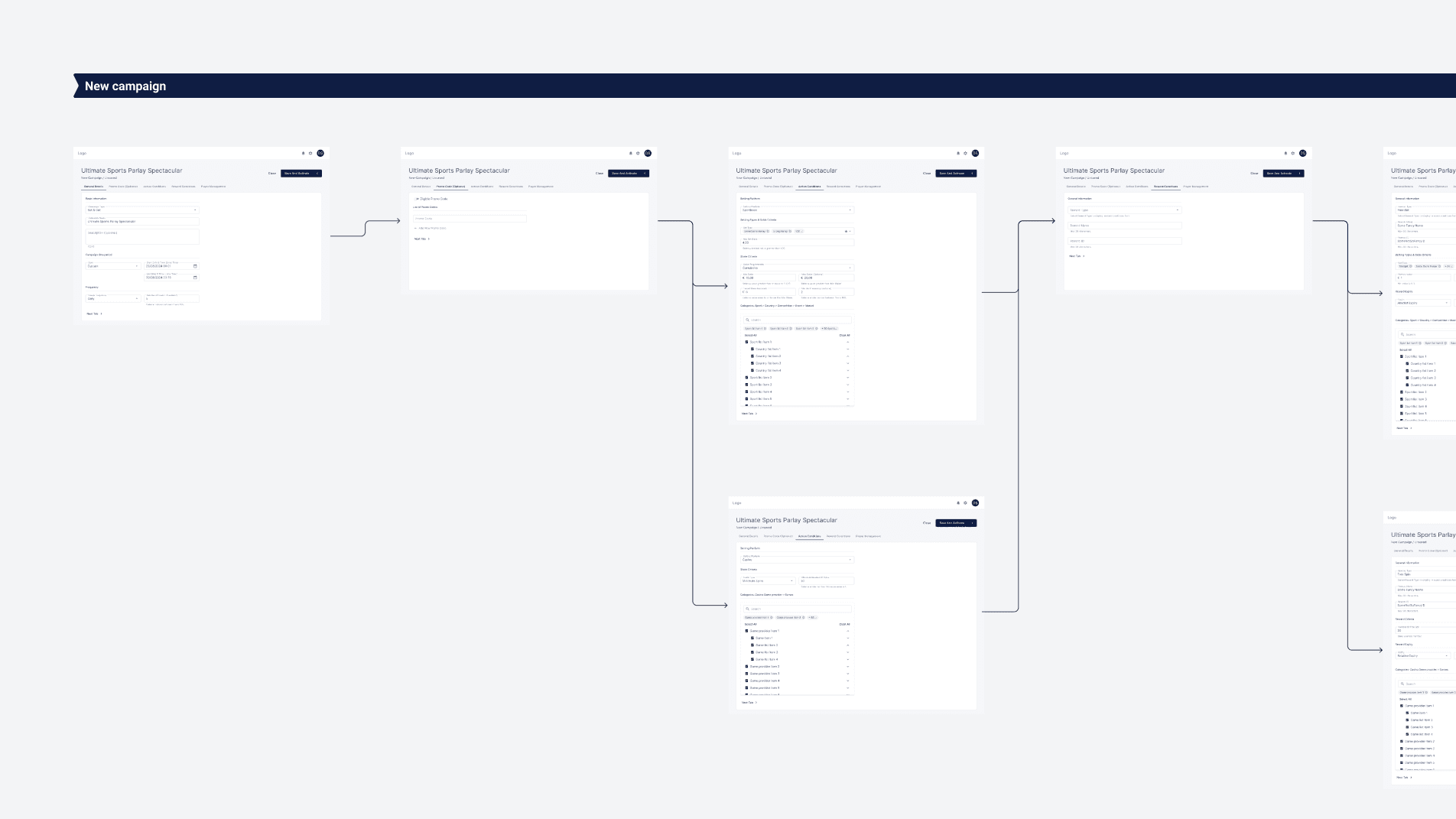
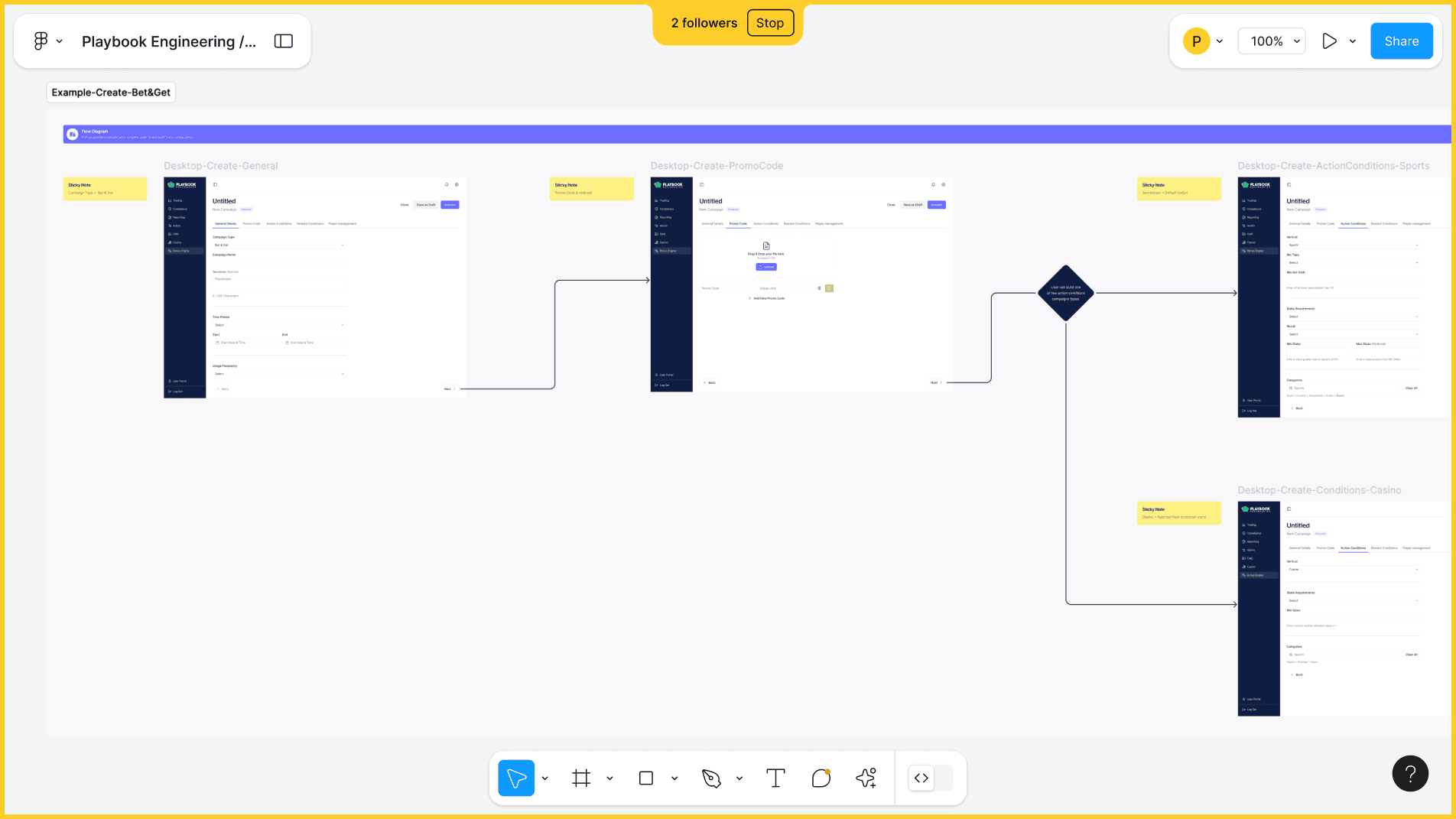
Because the UX logic originated from an outside agency, I focused heavily on the translation of requirements. I mapped their logic onto our ShadCN framework to ensure the dashboard felt like a cohesive tool rather than a disconnected set of features. By establishing a clear mapping system, I ensured that the complex backend data for bonus configurations translated into intuitive, manageable UI states.
Visual Design
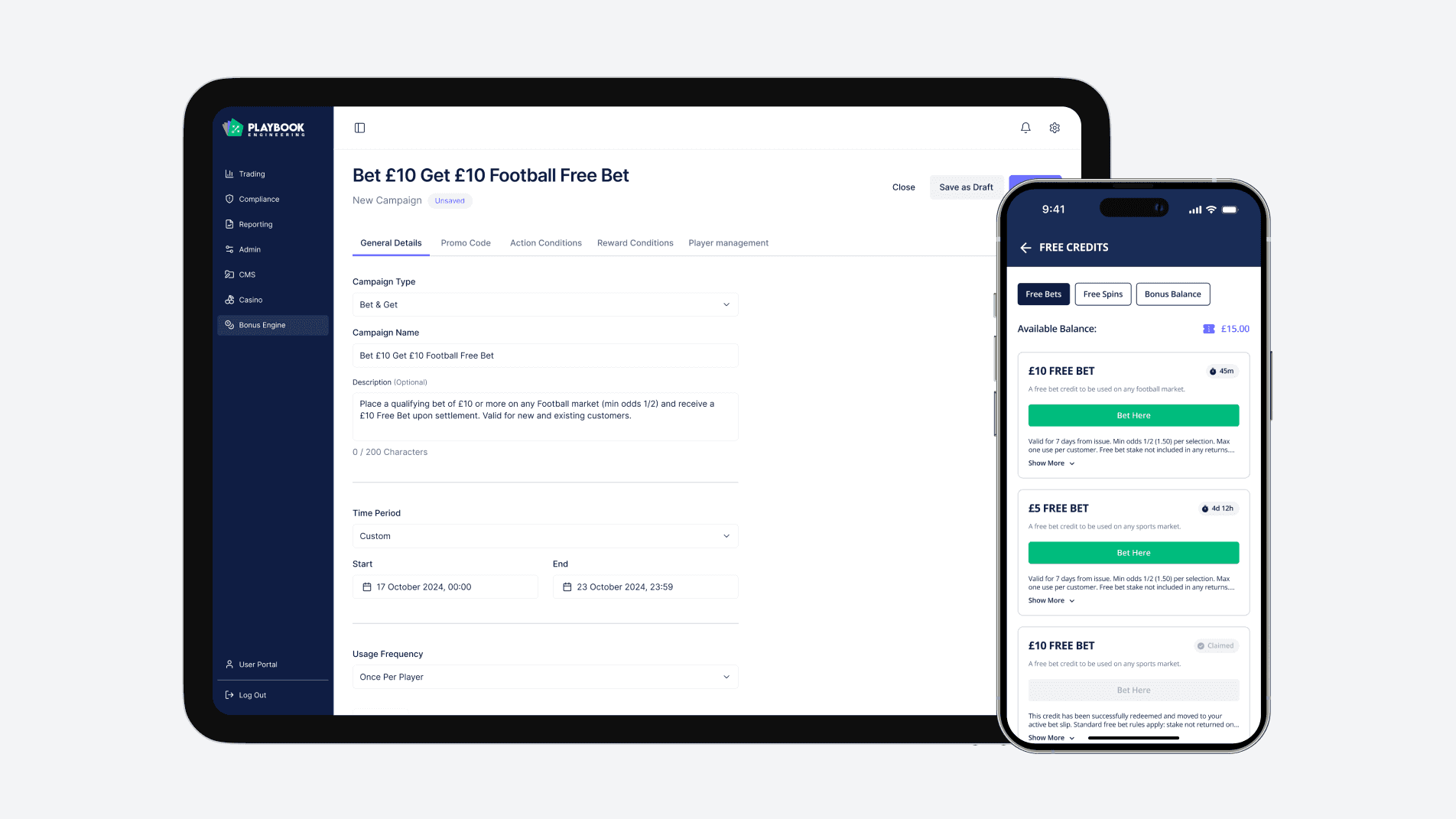
I managed two distinct design streams: overseeing the implementation of a clean, functional dashboard UI while personally designing the player-facing white-label frontend. I prioritised data clarity for the back-office tools, ensuring the information architecture was "utility-first". For the player side, I maintained a premium aesthetic that remained flexible enough to fit into any operator's brand estate. I utilised component properties and on-canvas documentation to ensure developers could implement these dual streams with total accuracy.
Usability Testing
Since the core UX logic was inherited, I performed a "Logic Audit" instead of traditional lab testing. I verified that the agency’s flows translated correctly into our new component architecture and ran internal walkthroughs with the operations team. This process allowed us to catch and fix UI friction points in the complex bonus configurations before the final developer handoff, ensuring the system was "stress-tested" for real-world use.
Outcome
We hit the four-week deadline with a complete, engineer-ready design system. By choosing a framework like ShadCN, we proved that we could achieve high-end visual results without the overhead of a custom build. The Bonus Engine is now the blueprint for all future dashboard rebuilds, establishing a sustainable standard for how we handle agency partnerships and internal tools.
Learnings
This project reinforced the value of adopting over inventing under tight deadlines. As a lead, it’s tempting to want everything custom, but making the strategic call to use an existing community framework saved months of back-and-forth. It allowed the team to focus on the actual product experience and functional logic rather than the border radius of a button.